HOW TO GLISSADE (PROPERLY)
And how to descend steep snow slopes in alpine terrain when glissading isn't the best option. It frequently isn't...
______________________________________________________________________________________
Everyone wants to do it, most people don’t do it correctly.
Doing it incorrectly has potential for negative outcomes; including killing you...
When should you glissade? When should you absolutely not glissade? How can you tell? What do you look for? How do you do it properly? Is there an improper way to do it? I’ll explain all those questions except the last one. The answer to that one is “Yes.” (But I’ll explain why, anyway.) But first, consider the fact that the entire point of glissading is to descend a steep now slope in the mountains faster than it would take you to downclimb it. In other words; “falling” ...the most common thing that everybody who goes into the mountains attempts to avoid. If your alarm bells aren’t sounding right now, they should be. The point of this post is to make sure that this fall is
c o n t r o l l e d . . .
The first thing to look for is soft snow.
You want arrestable snow; snow you can self-arrest in. You can tell if the snow is soft (and thus arrestable) by plunge-stepping. If you can easily plunge-step up to your calf or deeper, it’s soft. If you have to very aggressively drive your heel into the slope with all of your body weight to make a dent, it’s not soft. This is called “marginally arrestable snow”. Snow even firmer (and/or steeper) than that is called “non-arrestable snow”.
Don’t glissade in either of these types of conditions. Downclimb.
The next thing to look for is a clean run-out.
What does that mean? No cliffs below you, no rock-bands in your fall-line, no possibly-hidden snow bridges covering streams, no crevasses below you (actual crevasses are not an issue on Whitney, but creepcracks can occur), no one below who you could injure and/or be injured by. No deep, frozen glissade tracks that are more like luge runs, no glissade tracks that will vector you directly into into rockbands, etc. Imagine getting in a sled and sliding down the mountain. If there’s anything (other than speed and a loss of control leading to a tumble) that could injure or kill you if you slammed into it or fell into it or off of it, then you don’t have a clean run-out.
Don’t glissade in this type of terrain. Downclimb.
The next thing to look at is yourself. And your partners.
Are you/they wearing crampons? Are you/they holding only trekpoles with the mistaken notion that they’re the correct tool for the task at hand? Does anyone have loose flappy gear dangling haphazardly off of them? Is anybody just completely exhausted/fatigued/hypothermia/hypoxia/hypoglycemia/dehydration/AMS? Are some people not wearing a helmet?
Yes to some or all of those?
Don’t glissade with crampons on.
This can lead to broken legs.
Wear a helmet.
Fall hazards and rock hazards require one.
Trek poles don't work for this use case when it actually matters.
They break, they bend, they aren't designed for this purpose.
Wrangle all your gear.
For yourself and for any people who happen to be below you.
If you’re exhausted/fatigued...
...or suffering from hypothermia/hypoxia/hypoglycemia/dehydration/AMS, then you’re not thinking straight. If you’re not thinking straight, you can make mistakes. Slow down, explain things to yourself patiently. One time I climbed the Dent du Géant in the French Alps with the flu after having not slept for about 24 hours. I was a total wreck, both mentally and physically, but we climbed it anyway, because we'd already been turned around the year before when my partner was struck by rockfall and i felt guilty for wanting to bail again. (there's a case of "non-mitigated subjective hazard" for you...) For the descent, I started rigging the first rap anchor for an ~800 vert feet overhanging multipitch rap that required tramming. I didn't trust myself to perform all the steps properly. My partner checked my work and we proceeded safely.
Don’t glissade when you’re not thinking coherently. Downclimb.
Decided you shouldn’t glissade?
It’s very often the best choice. Now what? You have two options; Face-in downclimbing and face-out downclimbing. Face-in downclimbing is (way) slower, but it’s also (way) safer. You just reverse the exact motions you make when ascending. It’s easy. It’s almost impossible to mess up. Take your time. Find patience. (You’ll need it…)
Face-out downclimbing is faster than face-in downclimbing, but slower than glissading. Likewise, unsurprisingly, it’s safer than glissading and not as safe as face-in downclimbing. It’s Goldilocks, but with mountains.
Face-out downclimbing involves plunge-stepping. "Lean back" into the slope. Imagine yourself to be a plumb-line; you want to be pretty much completely vertical. (Being vertical on a steep slope feels like you're leaning back...) Drive your entire body-weight directly into your heel like a pile driver, leg straight. Then do it with the other leg. Repeat. Hold your ax in self-arrest mode (not self belay mode) just in case you blow a heel or trip and need to execute an arrest.
Keep foot/leg entrapments in mind, especially if you’re wearing a heavy pack and if postholing is a concern; you can break your leg.
The decision to wear crampons or not while plunge-stepping depends on if you plan to transition between plunge-stepping and glissading. I do this frequently, with some standing glissades thrown in, so in those cases I do not wear crampons. Other times, glissading is out of the question for various reasons, so I plunge-step and sometimes mix in some face-in downclimbing. In those cases, I leave my crampons on. If you decide the conditions are such that you need crampons when descending, as is often the case in the mountains (i just did it a few days ago...), be hyper-aware of every single foot placement. Gaiters are a good idea.
So you’ve decided to glissade?
What IS the proper technique? The single most important thing to remain vigilantly in control of is the ability to immediately go into arrest mode. (Snow conditions are variable…you can be in nice soft snow, slide 50 vert feet and then find yourself on very firm snow, going very fast). How do you do it correctly?
HERE'S THE CRUX
Stand up. Hold your ax in self arrest grip (not self-belay grip) in your dominant hand and put your arms straight at your sides, then raise your arm and point your ax out straight in front of you, like you’re using it to point at some distant feature. Now rotate your elbow and shoulder to bring the ax in parallel across your chest (the pick should now be pointing out in front of you, away from your body, where the spike was pointing a second ago, the adze or hammer is banging against your chest, near the shoulder of your ax hand). With your other hand, grab the ax shaft a little above the spike (the end of the axe). If you fell forward into the snow right now, you’d be in self-arrest position. Don’t fall forward though, just sit down. Dig the spike into the snow at your hip. This is your top brake. Your heels digging into the snow is your bottom brake. You can rotate the shaft of the ax 90 degrees, back and forth. Sometimes the ax pick is facing down the hill, sometimes it’s pointed perpendicular to the slope of the hill. Either way works and usually you’ll end up doing some blend of those two rotations.
That's it. That's all there is to it. Have (safe) fun...
Any other configuration of (seated) glissading with an ax is "wrong", because this the only way to ensure an actual immediate self-arrest if one is needed; you just simply roll over toward your ax head, not away from it (because if you roll away from the head and toward the spike, the shaft is likely to stab into the snow first and the ax will be ripped from your grasp…physics…) and then you’re automatically in self-arrest mode, instantly and with no further gymnastics or grip transfers.
The more you dig in the spike of your axe as you glissade, (by forcing your body weight into it) the more you’ll brake. This is quite a violent action that you need stay on top of and it can get really tiring on 1500 vert foot glissades, and your hands will get very cold and very wet, even in “water proof” gloves.
I’ve seen some weird stuff. I’ve seen people glissading while holding their mountaineering ax like they’re holding a pickax, prospecting for gold or something. If you hack at the snow above you as you’re sliding down a hill, holding your ax like this, you’ll almost certainly lose it; the pick will dig into the snow and effectively stop while you keep going, and since there is no mechanism on a standard mountaineering ax to prevent it, your hand will slip right off the end of the ax shaft (physics, again…)
Now you have no ax. Right when you needed it most. If you made the decision to leash the ax to yourself somehow, now you have a spear bouncing around your body as you tumble out of control down a slope at around 40mph. Not advisable. Worse, if you hack at the snow BELOW you as you slide down a hill while holding your ax like this, the ax will stop, but you won’t (once again; physics). This is exactly how and why people get impaled during glissades. You really need to think all this through...
I’ve also seen people glissading while holding their ax upside down, trying to dig the PICK into the snow. I’ve also seen almost everyone of these people lose that axe. (Same reason as above...) And the amount of trek poles i saw littering the snow slope a few days ago should be the metric you need to be convinced that trek poles aren't the right tool for this job...
THERE'S ONLY ONE PROPER WAY TO DO A SEATED GLISSADE
...if, like me, you define “proper” as “the way that actually works, allows for immediate self arrest and prevents you from losing an ax and suffering negative consequences.” If you try to do it any other way and things go sideways on you, you’ll really wish you DID do it this way. If you make it out of that dicey situation unscathed, you’ll go home with the impression that glissading is super scary.
But it’s not. It’s safe and easy. If you do it correctly.
Happy glissading! (or downclimbing, if you choose to...)
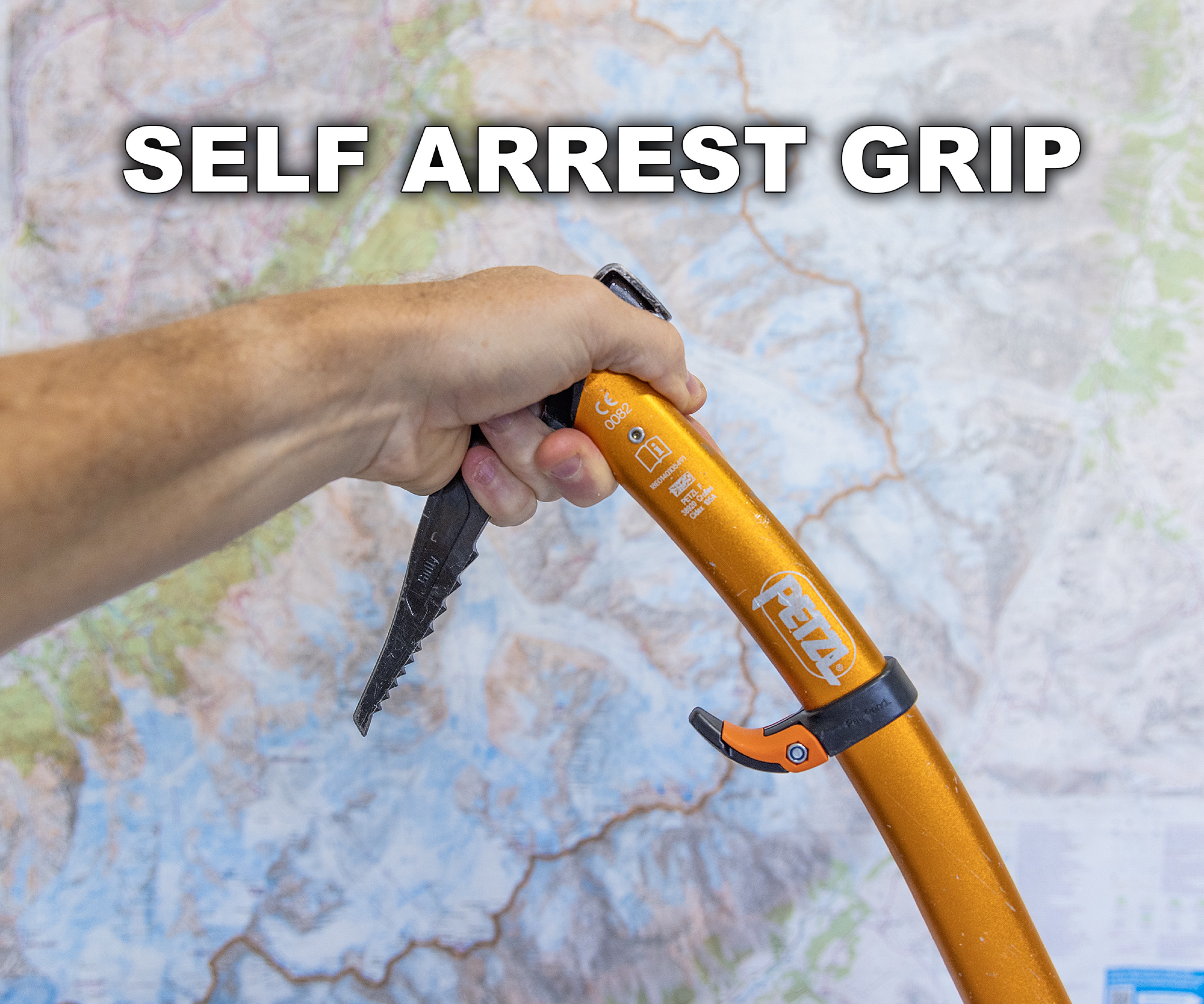
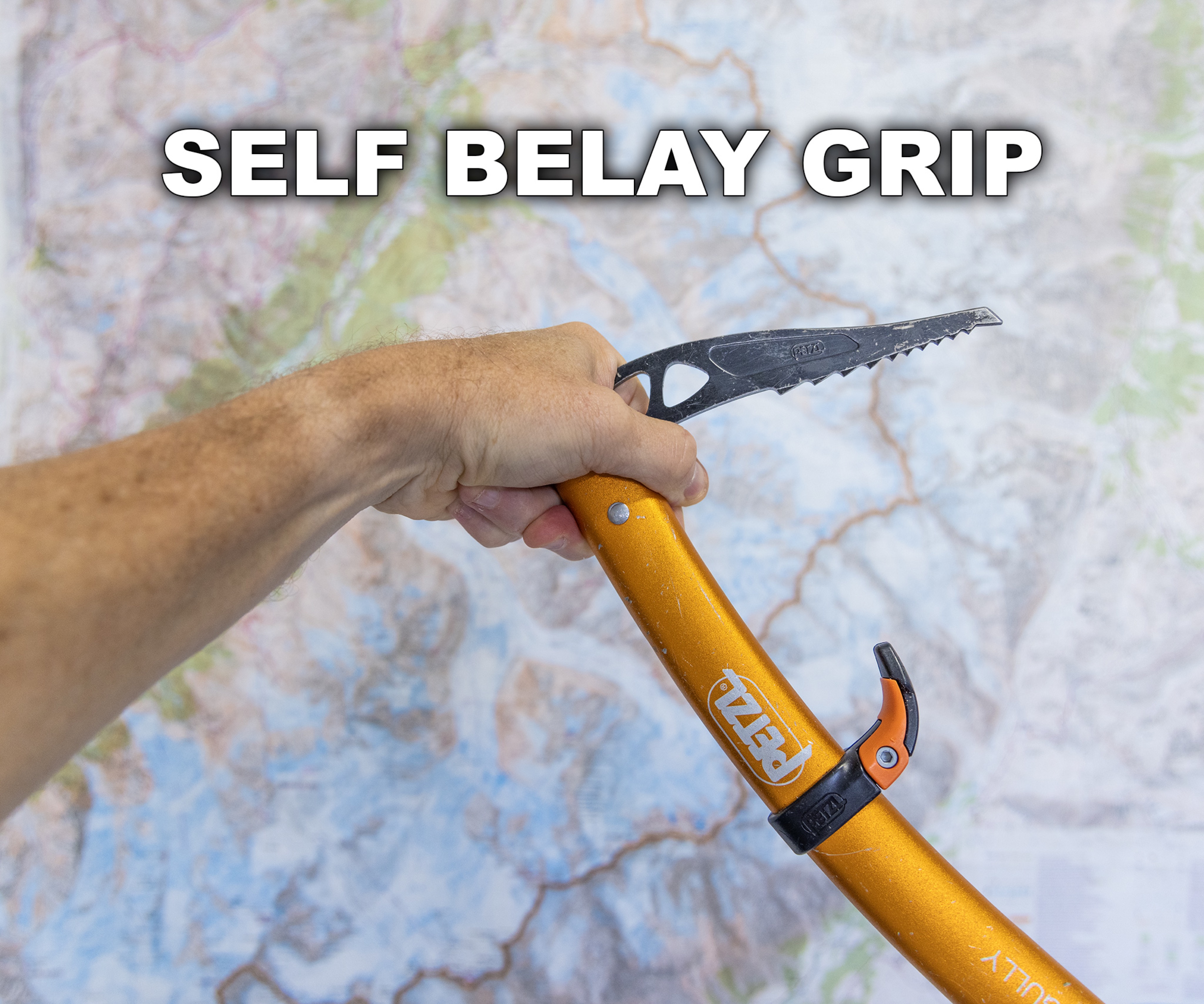
This is an old and rather antiquated way of holding an ice ax. I discussed this in a recent post:"Consider the fact that the most important thing you absolutely need to be able to immediately do on a 1500 vert feet 35 degree snow slope in an alpine environment is execute a self arrest; so don’t hold your ax in self-belay grip when in this kind of terrain, especially when there are rockbands in your fall-line. You can’t arrest from self belay grip and if you try, the pick of the ax might impale you; it might even penetrate your trachea, knock your teeth out or slit your throat. In general you don’t want sharp metal objects dancing around your face at high speeds. I think self-belay grip mostly stems from people thinking the ax is just more comfortable to carry when you rest your palm on the adze of the ax (hammer, in this case), but it’s kind of a throw-back to the alpenstock and hobnail boots days; it’s antiquated, unnecessary and prevents immediate arrest. You don't gain a wide enough margin of safety holding your ax in self-belay grip on steep slopes that you could fall off of to override the benefit you gain from holding your ax in self-arrest grip and using it in virtually exactly the same way, with the added bonus that no wrangling is necessary if you fall and need to execute an arrest within the next few seconds. I always climb steep slopes with my ax held in self-arrest grip. You can still ax-plunge. The only benefit self-belay grip gives you is a place to rest your other hand. I usually have a pole or another ax in my other hand."
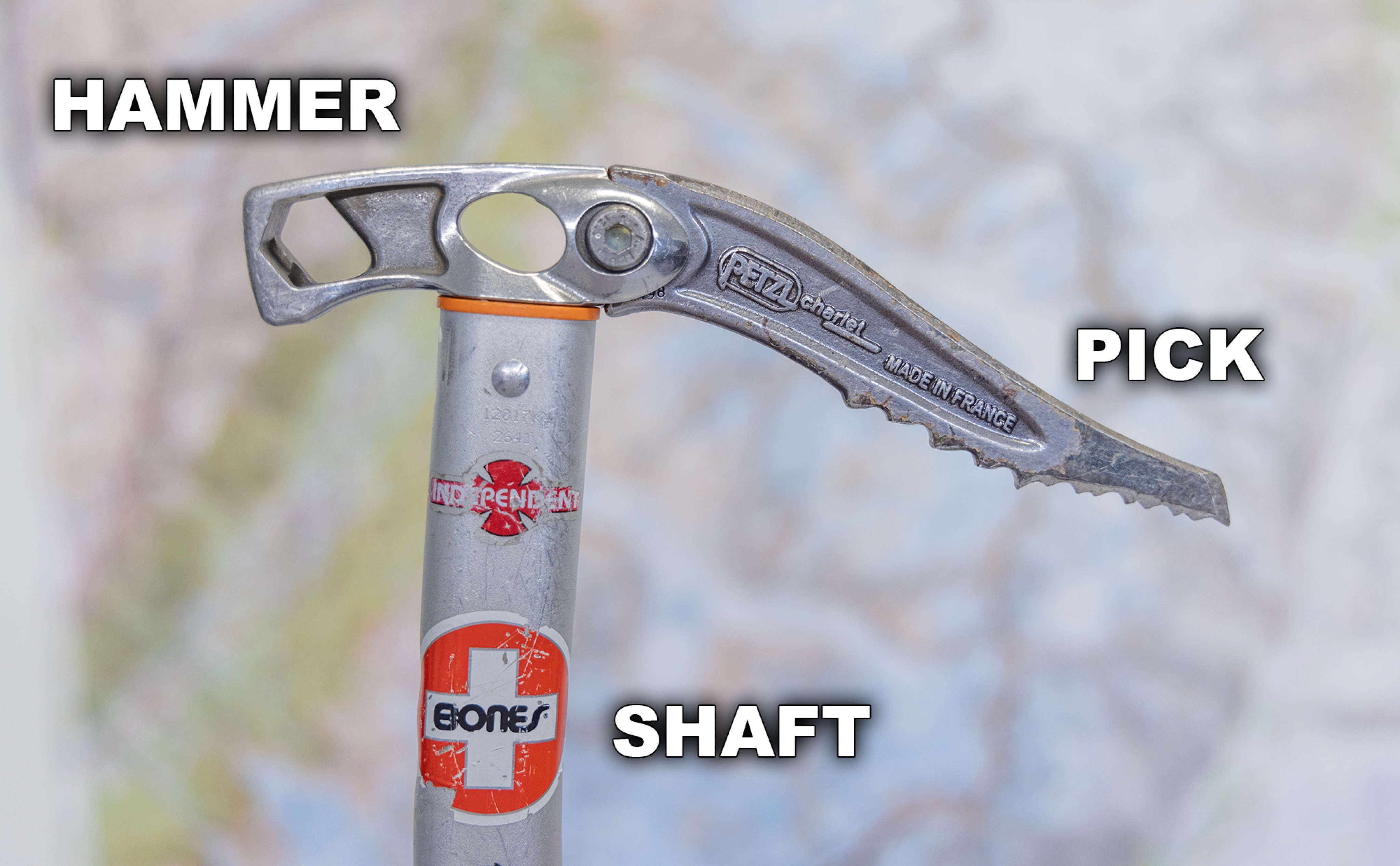
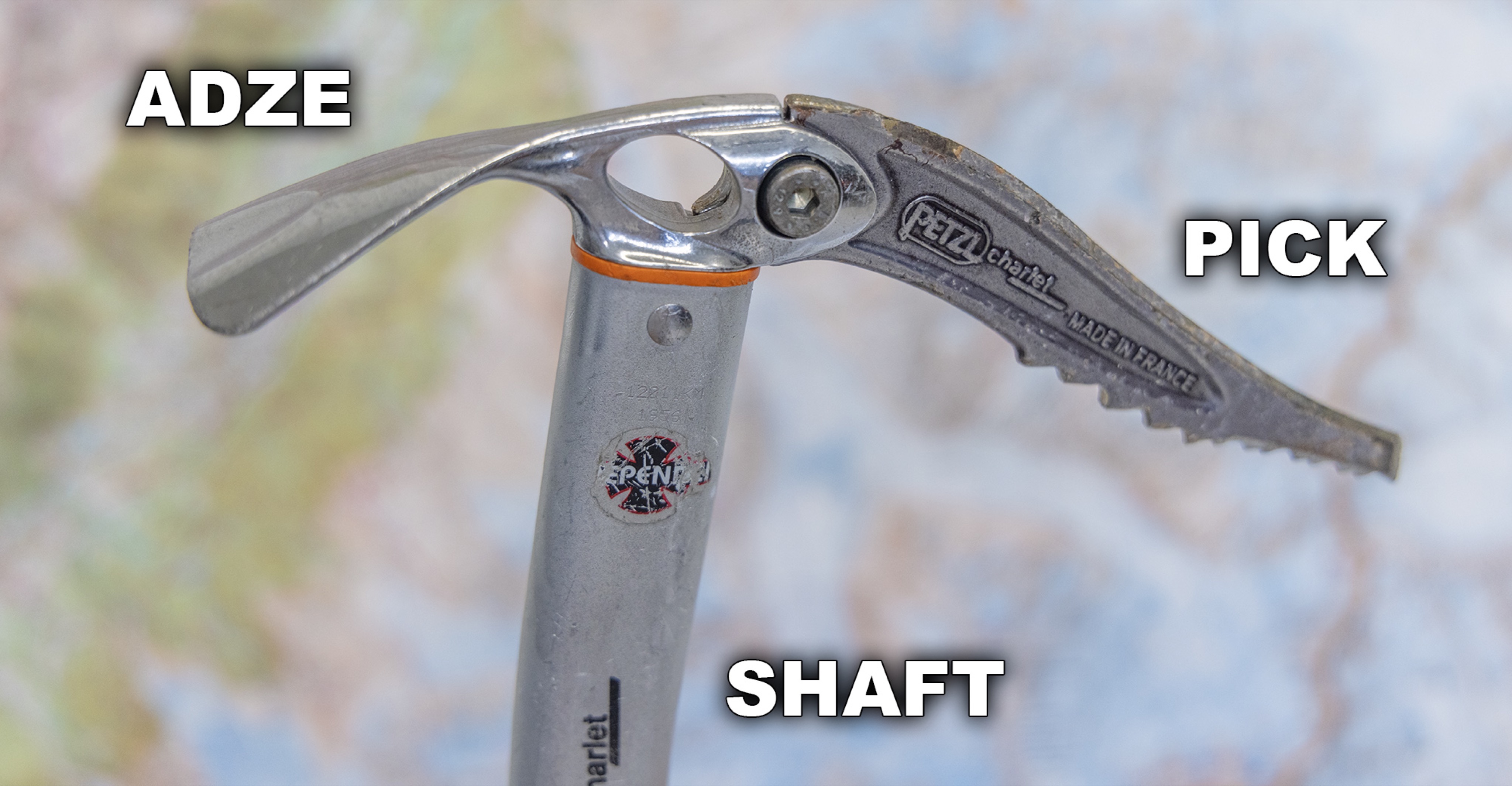
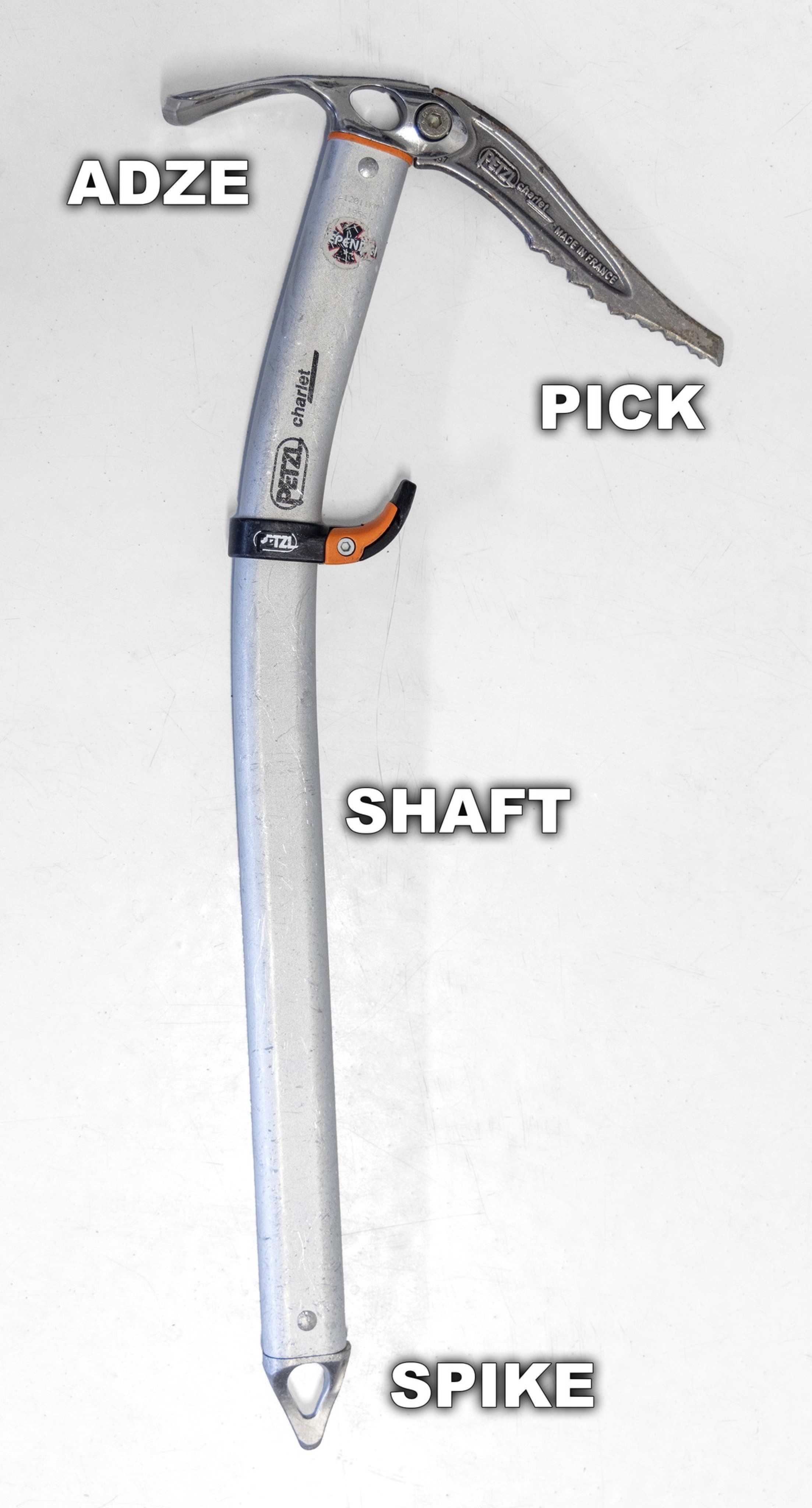
This is a Petzl SumTec. It's a pseudo-technical mountaineering ax, not a classic mountaineering ax. The TrigRest is mostly for when you are climbing in what's known as "dagger mode", more accurately "piolet panne", but piolet panne is also a bit antiquated and has been superseded by the curved ax shafts of technical axes and the ability to use dagger mode while grabbing the shaft of the ax instead of the head of a straight-shafted ax. The trigger can be slid down to the base of the shaft to be used a somewhat serviceable technical ice tool, but for those purposes (alpine mixt and ice climbing) most people use actual ice tools.